RED LIGHT THERAPY MANUFACTURING
Red Light Therapy Manufacturer for OEM and Private-Label Brands
This page covers the manufacturing side: taking a wearable red light model from specification through sampling and into a shipped production order.
Standard orders start from 100 pcs; customized projects generally start from 300 pcs. CE, FCC and RoHS documents are confirmed per model.
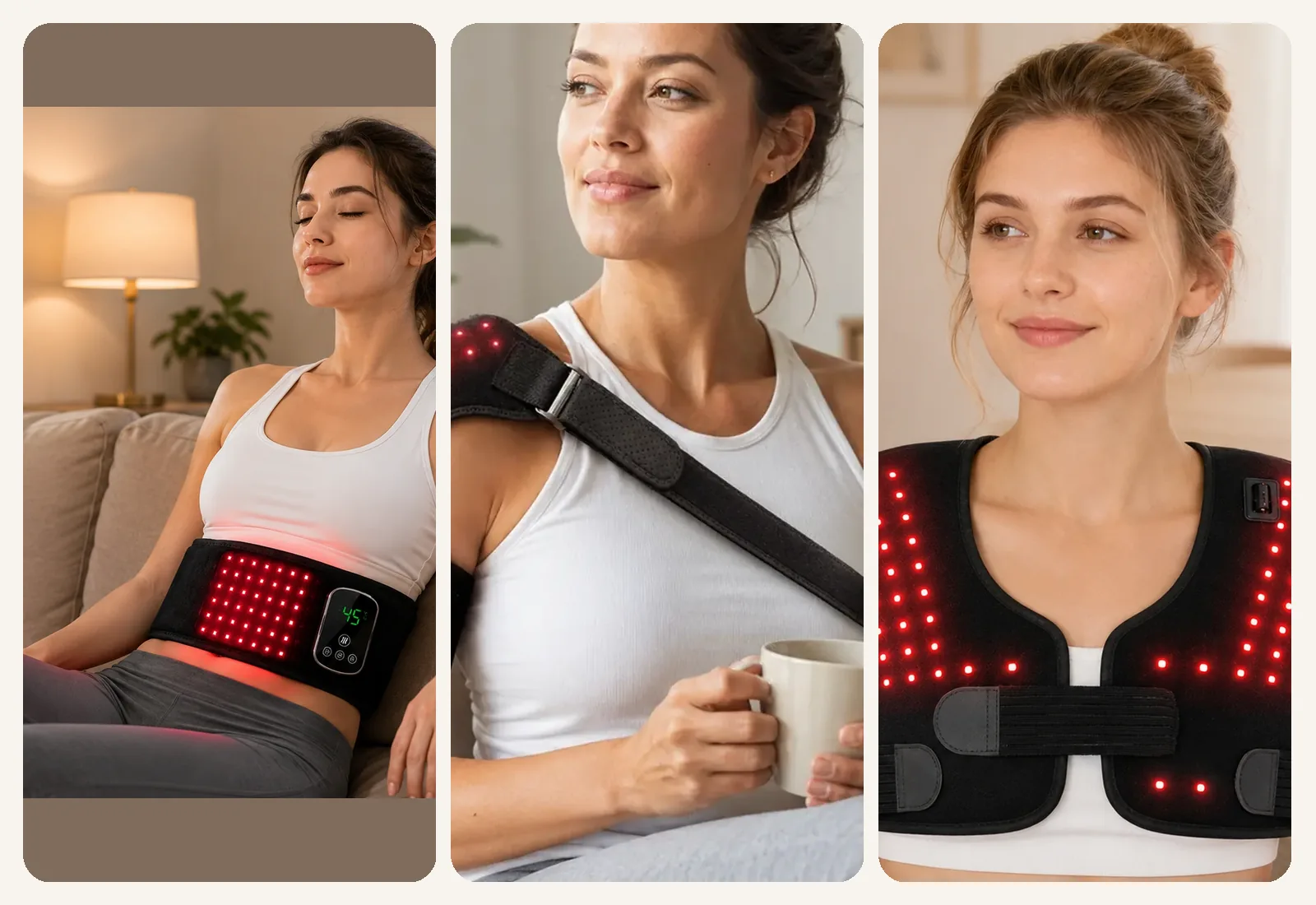
- Seven wearable models across knee, waist, shoulder and upper back
- 660nm red light and 850nm near-infrared configurations by model
- Logo, colour box, manual, appearance and selected function changes
- Samples built against a written specification before production
WHAT THIS SCOPE MEANS
Where Manufacturing Responsibility Starts and Ends
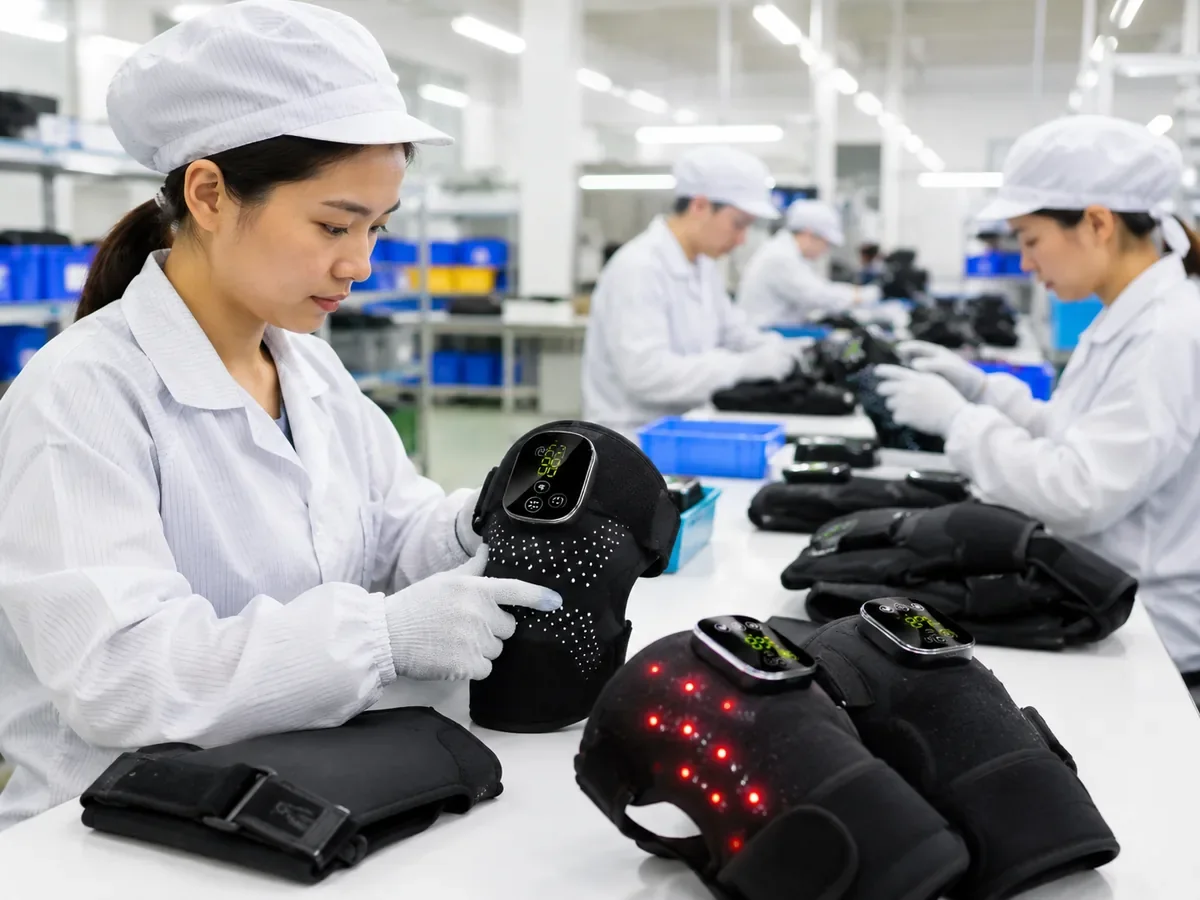
Buyers use the word manufacturer for different things. As a red light therapy manufacturer we work from existing wearable platforms, so here it means platform manufacturing: we begin from an existing model, agree the changes in writing, and stay responsible for sampling, production follow-up and the documents that ship with the order.
Start from a proven platform
Adapting an existing wearable model is usually faster than tooling a new one, and the documentation already exists for that platform.
Change only what is agreed
Cosmetic and packaging changes are straightforward. Changes that affect the light source, heat control or power design are assessed before anything is promised.
Documents follow the model
CE, FCC and RoHS are tied to a specific model and destination market, so they are confirmed per model rather than as a general company claim.
PRODUCTION STEPS
The Four Steps Between Enquiry and Shipment
Each step ends with something you can review. Nothing moves to the next step on a verbal agreement.
01
Specification review
You send the model reference, the changes you want and the destination market. We reply with what is feasible, what is not, and what each change affects.
02
Sample against that spec
The sample is built to the agreed specification, not to a catalogue photo. You evaluate light output, heat behaviour, fit and packaging in hand.
03
Pre-production confirmation
Artwork, labelling, manual text and carton markings are frozen in writing before the production run starts, so nothing is decided twice.
04
Production and pre-shipment
Production runs to the confirmed specification. Inspection points and any third-party inspection are agreed beforehand, then documents are issued with the shipment.
INSPECTION POINTS
What Gets Checked, and When
An inspection plan is agreed with the order. For wearable red light models it usually covers these points; the exact list depends on the model and on what your market requires.
- Incoming components — light modules, controllers, batteries and fabrics compared against the approved supplier specification
- In-process assembly — wiring, heat element placement and stitching checked during build, not only at the end
- Function verification — light modes, heat levels, vibration settings and controls operated across the agreed sample set
- Battery and charging — capacity behaviour and charging cycle checked on the agreed sample
- Final and pre-shipment — packaging, labelling, accessories and carton markings compared with the approved artwork
- Documents — CE, FCC and RoHS files matched to the model actually shipping
WHAT CAN BE SPECIFIED
The Changes That Come Up Most Often
This is the short list of things buyers normally change. Anything outside it is assessed case by case before a sample is quoted.
Wavelength configuration
660nm red light and 850nm near-infrared are configured by model; the combination is fixed per platform.
Heat and function control
Temperature range, vibration modes and control layout are set per model rather than adjusted after production.
Packaging and branding
Logo placement, colour box, manual language and carton markings are all part of the specification pack.
Voltage and plug
Rechargeable models use USB charging; plug-in models are specified for the destination market’s supply.
CHOOSING THE RIGHT SCOPE
Manufacturer, Contract Manufacturer, or Trading Company
These are three different scopes, and a quote written for one of them often gets read as if it were another. Sorting this out first saves a sampling round.
Platform manufacturer (this page)
You start from an existing model. Changes are agreed, then a sample is built against that agreement.
Contract manufacturer
You already own the design and documentation and need production capacity. That scope is described on our contract manufacturing page.
Trading company
A trader sources finished goods and resells them. If the specification needs to change, a trader has to go back to whoever actually builds it.
Why the distinction matters
It decides who answers for the light source, the heat control and the certification file when something goes wrong after shipping.
MANUFACTURING QUESTIONS
Questions Buyers Ask Before a Production Order
If your question is about an existing design you own, or about wholesale quantities rather than production, the answer is on the wholesale supply page.
Do you build to my own design, or only from your catalogue?
Both scopes exist, but they are handled differently. This page covers adapting one of our existing wearable platforms. If you already own a finished design and documentation, the contract manufacturing page describes that route instead.
What can I actually change on an existing model?
Branding, packaging, manual, appearance and selected functions are normally changeable. Anything touching the light source, heat control or power design is reviewed first, because it can affect the certification file for that model.
What should I send before asking for a sample?
The model reference, the list of changes, the destination market and an estimated order quantity. Those four items are enough for us to say what is feasible and what the sample would represent.
Which certificates come with a model?
CE, FCC and RoHS documents are confirmed per model. If your market requires something beyond these, tell us the market and requirement before the order so it is assessed properly rather than assumed.
How do I follow production once it starts?
Inspection points are agreed before the run begins, and you can appoint a third-party inspection agency at the stages you choose. Progress updates are tied to those stages rather than to a calendar promise.
Can the packaging look like our own brand?
Yes. Colour box, logo placement, manual language and carton markings are part of the specification pack, and artwork is frozen in writing before production starts.
START A PRODUCTION ENQUIRY
Tell Us What You Need Built
Send the model, the changes and the market. You will get a reply that separates what is confirmed from what still needs checking.
- Model reference or body area
- Changes you want to make
- Destination market and required documents
- Estimated order quantity