The heated wrap battery is the one component your customer never sees, but it decides almost everything they feel. How long the wrap stays warm, how heavy it is on the knee, how quickly it charges, and how smoothly it clears customs. I’ve watched buyers spend weeks picking fabric colors and then treat the battery as an afterthought, which is exactly backwards.
If you’re working with a heated wrap OEM manufacturer, the battery conversation should happen in your first spec meeting, not after the sample arrives. This guide walks through the decisions that matter and the questions worth asking before you commit.
Why the Battery Decision Shapes Your Whole Project
Four things hang on the battery choice:
- Runtime. A wrap that dies halfway through a relaxation session gets returned, or worse, reviewed. Your customer’s expectation of “long enough” depends on how you position the product, so runtime and marketing have to match.
- Weight and comfort. More capacity usually means more weight. On a waist wrap that’s tolerable. On a knee wrap worn while moving around the house, it changes the whole wearing experience.
- Cost. The battery pack is one of the more expensive components in the build. Bumping capacity moves your unit price more than most buyers expect.
- Cert burden. Lithium batteries carry their own shipping and documentation requirements. The bigger and more complex the pack, the more attention it needs.
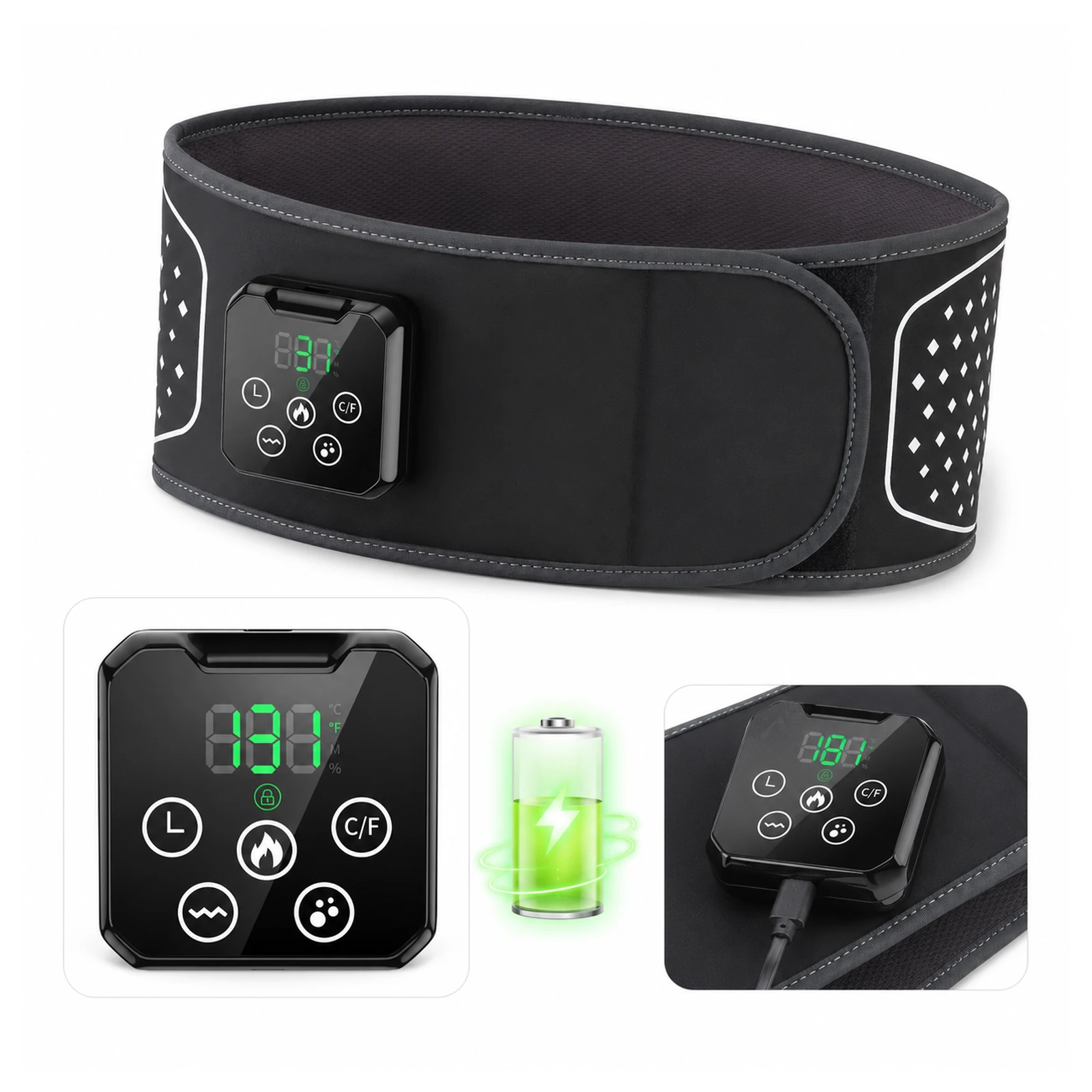
There’s no single right answer here. A cordless rechargeable heated waist massager like our WM001 pairs its battery with adjustable heat and four-zone air compression, because the use case justifies the weight. A simpler knee wrap might prioritize staying light. The form factor leads, the battery follows.
Capacity vs Runtime vs Weight
Here’s the trade-off in plain terms. Battery capacity is what determines how long a wrap can hold its heat setting. Higher capacity means longer runtime. It also means a heavier pack and a longer charge time. Lower capacity flips everything: lighter wrap, quicker charge, shorter sessions.
The mistake I see is buyers asking for maximum everything. “Longest runtime, lightest weight, lowest cost” isn’t a spec, it’s a wish. What actually works is deciding who wears the wrap and for how long. A shoulder wrap used while reading on the couch has different needs than a knee wrap worn during a walk. Once you define the session, the capacity range narrows quickly.
It also helps to remember that the heated wrap battery isn’t a component you can quietly upgrade after production starts. Changing cell size or chemistry mid-project means re-sampling, re-testing, and sometimes re-doing the documentation you already filed. Lock this decision early, when changes still cost a week instead of a quarter.
One practical note: most quality consumer wraps now charge over Type-C. It’s what your customer already owns cables for, and it simplifies your packaging. If a factory is still pushing a proprietary barrel connector, ask them why.
UN38.3 and What It Means for Shipping
If your wrap contains a lithium battery, it cannot fly without a UN38.3 test summary. This is the UN standard that covers lithium cell safety in air transport — things like altitude simulation, thermal testing, vibration, and short-circuit checks. Freight forwarders and airlines will ask for the document. No summary, no air shipment. It’s that simple.
A few things worth knowing:
- Air freight requires the UN38.3 summary and, depending on the shipment size and battery watt-hours, may classify your goods as dangerous goods with corresponding packing and labeling rules.
- Sea freight is generally more relaxed on documentation for lithium batteries, though the cells still need to be compliant and packed correctly. Many first orders go by sea for exactly this reason, plus the cost difference. If your launch date is fixed and tight, tell your factory upfront — planning the freight mode before production finishes is much easier than explaining a customs hold to waiting customers.
- Who arranges it: a factory that regularly ships battery-powered products will have the test summaries on file from its cell suppliers and can produce them for your forwarder. This is a standard request. If a factory hesitates or claims it’s unnecessary, treat that as a serious warning sign.
On the broader compliance side, general electronics certifications like CE, FCC, and ROHS apply to the finished wrap as they would to any consumer electronics product. Ask your factory early which documents they provide and which you’re expected to arrange locally, because that split varies by market.
Practical Questions to Ask Your Factory
Before you sign anything, put these questions in writing:
- What cell brand and tier do you use? There’s a real quality spread between name-brand cells and the cheapest options on the market. A good factory will answer without blinking.
- What’s the expected cycle life? This tells you how many charge cycles the pack holds before capacity drops noticeably, which shapes your warranty policy and your returns experience.
- How long does a full charge take? Your customer will notice, and so will your listing copy. Charge time belongs on the spec sheet, tested and confirmed, not guessed.
- What’s the replacement battery policy? Batteries age. If the pack is integrated, what happens at end of life? If it’s swappable, can you order spares with your logo? Buyers rarely ask this and almost always wish they had.
The battery is also a good honesty test for a supplier. Factories that answer these questions with real documents are the ones that answer other questions well too. If you’re comparing partners, our heated wrap OEM manufacturer guide covers the full evaluation checklist, from sampling timelines (typically 7–10 days for samples, 30–45 days for production) to MOQ expectations around 300 units per SKU.
Get the battery right and the rest of the project tends to fall into place. Get it wrong and no amount of packaging design will save your reviews.
Ready to build your heated wrap line?
Tell us your target market and form factor — we’ll send a brief template and a sample quote.