Red Light Therapy Device CE FCC ROHS Certification: Importer Checklist
If you import wellness electronics, certification is the unglamorous step that decides whether your shipment clears customs or sits in a holding facility racking up storage fees. The term red light therapy device ce fcc rohs sounds like one box to tick, but it’s really a short list that depends entirely on where you plan to sell.
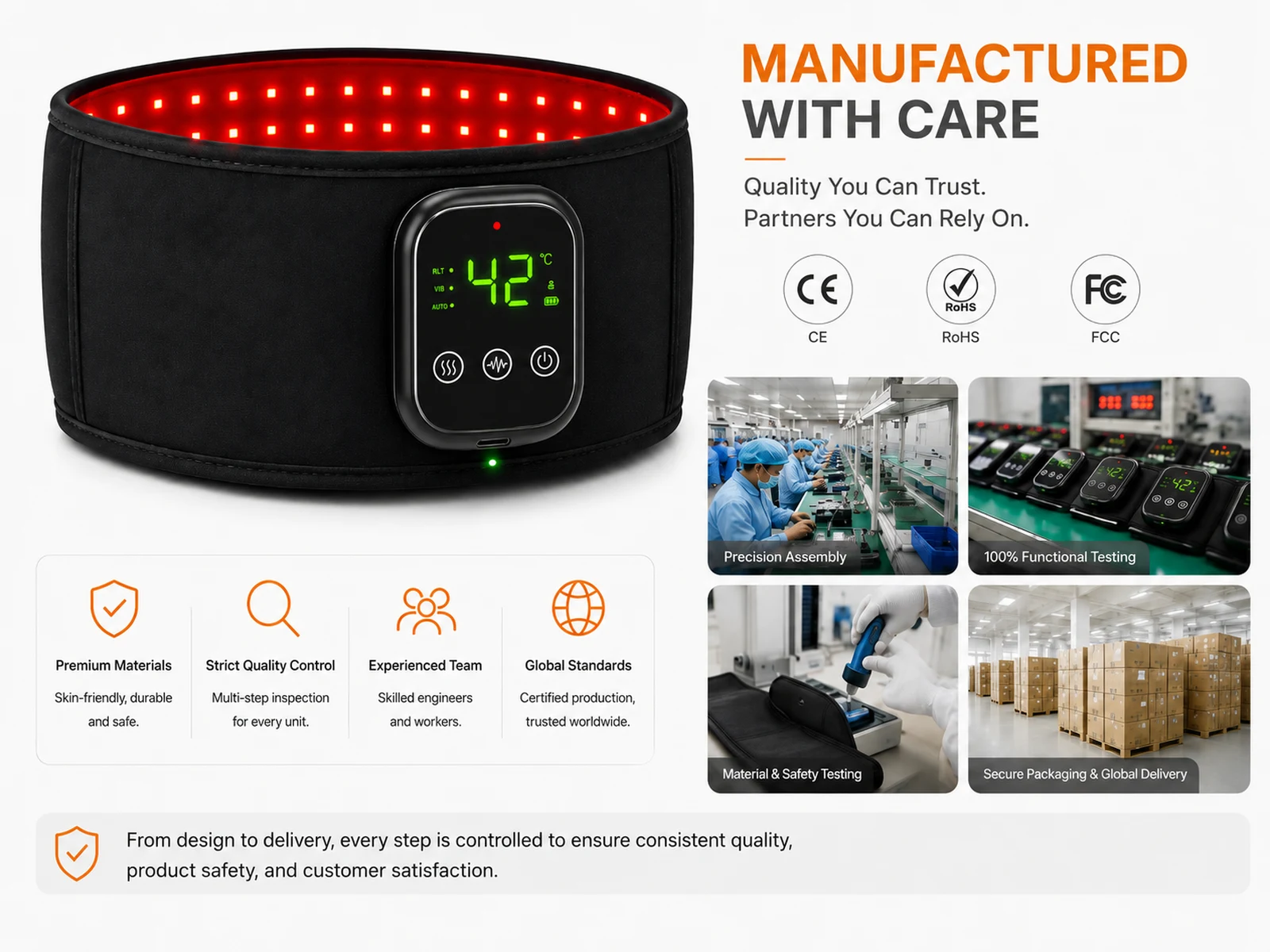
I’ve seen perfectly good products get delayed for weeks because the importer assumed a single certificate covered every market. It doesn’t. Here’s the checklist I hand every new buyer before they commit to a production run.
Red Light Therapy Device CE FCC ROHS: Which Mark You Need by Market
Start with the destination, not the product. The same wrap needs different paperwork depending on the flag on the shipping label. Match the cert to the market and you avoid most surprises.
- European Union — CE plus ROHS. CE covers the general electrical safety and electromagnetic requirements. ROHS restricts hazardous substances in the components. For a wellness device like our knee wrap, these two are the baseline, not the finish line.
- United States — FCC. The FCC handles electromagnetic interference, not safety per se. If your plug-in shoulder and back wrap has a battery, a timer, or any wireless hint, this one matters. Note that FCC is not FDA clearance. Keep your claims about comfort and relaxation and you stay on the easier wellness path instead of a 510(k).
- United Kingdom — UKCA. Post-Brexit, CE alone doesn’t cover Great Britain the way it used to. UKCA is the local parallel mark, and you’ll want it if the UK is a real market for you rather than an afterthought.
- Japan (PSE) and South Korea (KC). Smaller markets for many brands, but if you’re targeting them, the mark is required and the test houses differ. Build it into the plan early rather than scrambling once the container is booked.
If you’re building a private-label red light therapy device, certification is only one slice of the journey. The full guide walks through sourcing, sampling, and production alongside it so the marks don’t become a last-minute panic.
Photobiological Safety: IEC 62471
This one surprises people. Beyond the electrical marks, wellness light products are judged on how the light itself behaves, under a standard called IEC 62471. It’s less scary than the number looks.
The test sorts a device into a risk group — from RG0 (exempt, essentially no concern) up through RG3. For consumer wellness waist wraps and panels, the goal is almost always RG0 or RG1, meaning the output stays within safe comfort ranges for normal use. A good manufacturer designs the LED density and diffuser so the product lands in the low-risk band without sacrificing the warm glow customers expect from a red light product.
Why does this matter for marketing? Because a clean IEC 62471 report is something you can actually put in front of a retailer or a cautious distributor. It turns “we think it’s safe” into “here’s the test.” In a category where buyers are wary of unproven gadgets, that paper does quiet selling for you. We run this test as part of our standard support, so the number is on file before you launch rather than hunted for after a buyer asks.
A small habit that saves grief later: keep every cert and report in one folder tagged by model and market, not scattered across email threads. When a platform suspends a listing or a buyer requests proof, you want the right PDF in ten seconds, not a frantic search. Most disputes over compliance are really disputes over lost paperwork, and that’s the easiest kind to prevent.
How to Verify Your Supplier’s Certificates
Receiving a PDF with a CE logo is not the same as holding a certificate that will survive scrutiny. I tell buyers to slow down here, because this is exactly where the cheapest suppliers cut corners and the cost shows up later, at your dock.
- Check the test report’s authenticity. Real reports name the issuing lab, the product model, and the specific standards applied. Ask for the lab’s contact or look up the report number. A blurry logo on a generic sheet is a red flag, not a credential you can defend to customs.
- Match the certificate to your exact model. A cert for a similar shoulder wrap doesn’t cover yours. The model number on the paper has to match what you’re shipping, or both customs and the sales platforms will treat it as missing and pull the listing.
- Clarify who pays for renewal. Certificates expire and standards get updated. Ask up front whether the factory covers re-testing on a stable product, or whether you’re on the hook each cycle. This is a line item worth settling in the contract, not in a panic email a year down the road.
Choosing a partner who handles this paperwork competently is half the battle. You can see how we structure cert support and documentation on our red light wellness products supplier page, including the labs we work with and what we prepare before a run even starts.
The short version: certify for the market you’re actually shipping to, keep the photobiological report current, and never accept a certificate you can’t trace back to a real lab. Do those three things and the wellness path stays calm and boring, which is exactly what you want from compliance.
Ready to take the next step on your red light product?
Tell us your target market and form factor — we’ll send a brief template and a sample quote.